Our Products
We Are Leader In Industrial Market
About
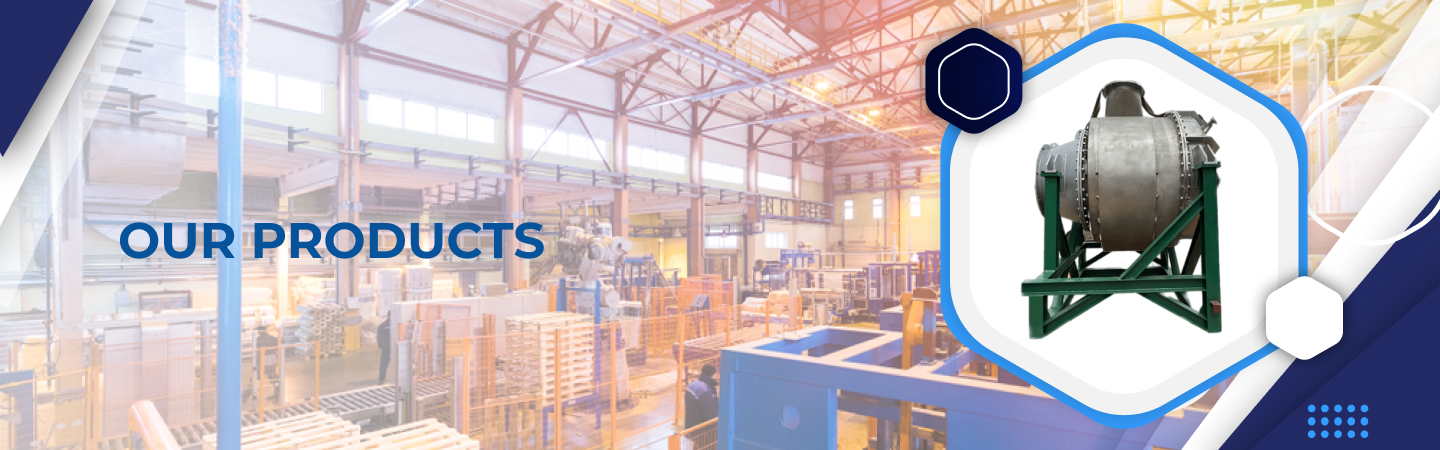
Agglomerator
Carbon black is a fine, powdery material that is widely used as reinforcing agent in rubber, and as a pigment in plastics and other materials.
The Agglomerator in a Carbon Black process is part of the filtration process It is composed of a cylindrical vessel with a long conical bottom.
The smoke gas from the reactors (Carbon Black plus Tail gas), after being cooled down to 240 to 250°C by the Venturi cooler, enters tangentially into the Agglomerator top cylindrical part, and due to the rotation and friction to the cylindrical and conical walls, the very low density fluffy Carbon Black is densified in form of large soft pellets.
The discharge of the smoke/densified Carbon Black from the bottom of the Agglomerator enters the hopper of Main Filter or Primary Bag Filter (PBC) for the separation of the off gas (Tail gas) from the solid Carbon Black
The densification of the Carbon Black is the first step of the filtration system, helping the final filtration in the Primary Bags Collector, therefore increasing the overall capacity of filtration
About
Burner, Lances and Nozzles
Burners, lances, and nozzles are important components used in carbon black plants to create the conditions necessary for the carbon black production process. Here’s a brief description of each:
- Burners: Burners are devices that provide high-temperature flames or heat to the reactor furnace, which is used to convert hydrocarbons into carbon black. The burners are typically designed to provide a uniform flame and temperature distribution throughout the furnace. They can be fueled by natural gas, oil, or other hydrocarbon fuels.
- Lances: Lances are used to introduce air or oxygen into the reactor furnace. This is necessary to provide the necessary conditions for the combustion of the hydrocarbon feedstock. The lances are typically made of refractory materials that can withstand the high temperatures and harsh conditions inside the furnace.
- Nozzles: Nozzles are used to inject the hydrocarbon feedstock into the reactor furnace. The nozzles are designed to provide a uniform spray pattern and droplet size distribution, which is important for achieving the desired particle size and properties of the carbon black product. The nozzles can be designed to handle a wide range of feedstock viscosities and flow rates.
Overall, burners, lances, and nozzles are critical components in the carbon black production process. They must be designed and operated carefully to ensure optimal performance and high-quality product output.
About
Carbon Black Feeder
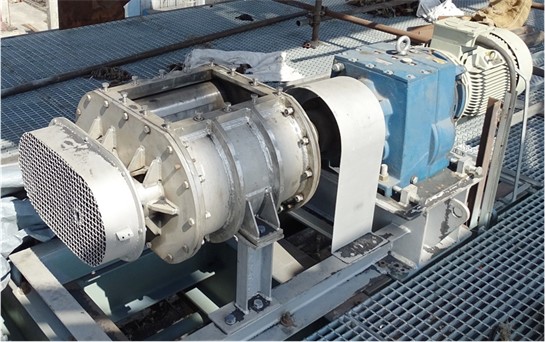
In the carbon black plant, the carbon black feeder is a crucial component of the overall granulation system. It feeds the densified fluffy carbon black powder from the Surge bin (Agitator tank) into the Pelletizer
Due to the special twin lobes design and the high speed it can operate, the densified fluffy Carbon Blacks is pumped very smoothly and uniform into the Pelletizer for granulation, improving and making more uniform with better control of the Pelletizer and therefore the final quality of the pellets
Normally is operated with a VFD that controls the speed with a feedback control loop to control the level of the Carbon Black in the Surge bin
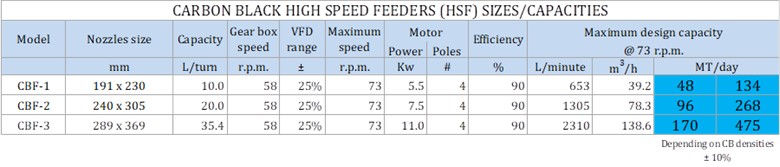
We provide three different sizes/capacities for these CBF
About
Combustor
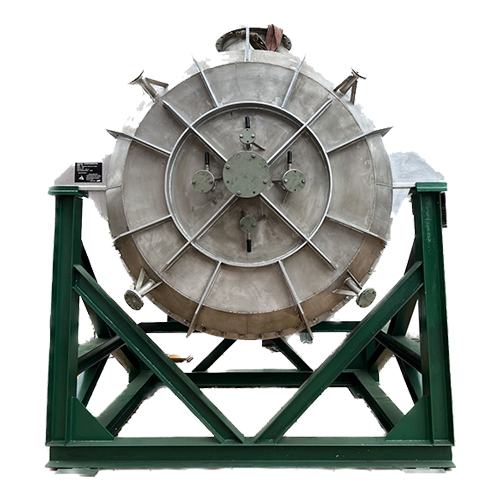
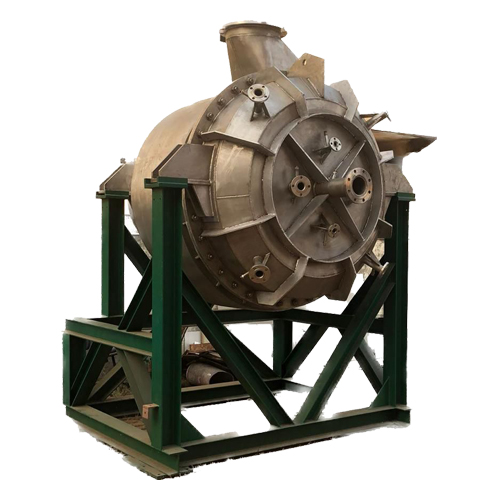
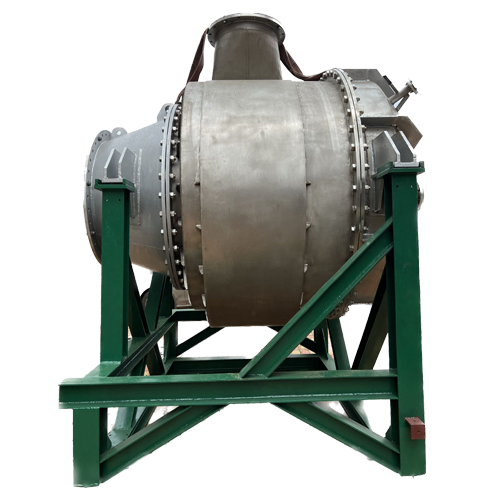
The Combustor is the first and one of the most important components of a Carbon Black manufacturing process.
A Carbon Black combustor is a device designed to burn Natural Gas, Oil (Secondary feedstock) or COG.
The purpose of a Combustor is to generate a hot stream of gas, that in contact with the Feedstock oil will crack the molecules of the aromatic hydrocarbons (Pyrolysis) into elemental Carbon (Carbon Black) and Hydrogen.
Our carbon black combustors are made of heat resistance alloys typically operating at temperatures from 1,400 up to 2,200 degrees Celsius, depending on the internal refractory configuration.
These very high temperatures are critical for the overall efficiency and economics of the process, producing very high conversion efficiencies (Carbon Black yield)
Downstream of the combustor, a choke is installed, where the feedstock is injected at high temperature and high pressure.
We provide specially designed WCC (Water Cooled Chokes) and high performance injection nozzles (HP-95) for maximum efficiency
About
Oil Pre-heater
The oil pre-heater is a part of the energy recovery system in the Carbon Black manufacturing process, but also plays an important role reducing the viscosity of the feedstock as well as in the quality of the product.
The oil pre-heater is a critical component used in the carbon black plant, designed to efficiently heat the heavy feedstock oil before it enters the cracking furnace for the carbon black production process. It plays a pivotal role in ensuring optimal operational performance, better quality and improved Carbon Black yield.
The oil pre-heater is composed of a cylindrical shell and internal tubes, capable of handling high temperatures and heavy oil flows. It is usually positioned (inline) downstream of the Air Pre-heater (APH), receiving the feedstock oil from storage tanks or other sources and using as heating media the smoke gas. The pre-heater is designed to heat the oil to the desired temperature, which is typically in the range of 200-350 degrees Celsius, before it is introduced into the cracking furnace.
We provide two versions of oil pre-heaters, with a single coil, to pre-heat the feedstock (Make oil) or our dual version with two coils to pre-heat the Make oil and the Secondary oil (SFS) if this is used, in the same shell
In addition, our oil pre-heaters have incorporated an automatic steam cleaning system and a by-pass system for automatic temperature control
In summary, the oil pre-heater is a critical component in the carbon black plant, responsible for efficiently heating the heavy feedstock oil to the desired temperature before it enters the cracking furnace. It ensures optimal operational performance, high-quality carbon black production, and energy efficiency while adhering to stringent safety standards
About
Pelletizer
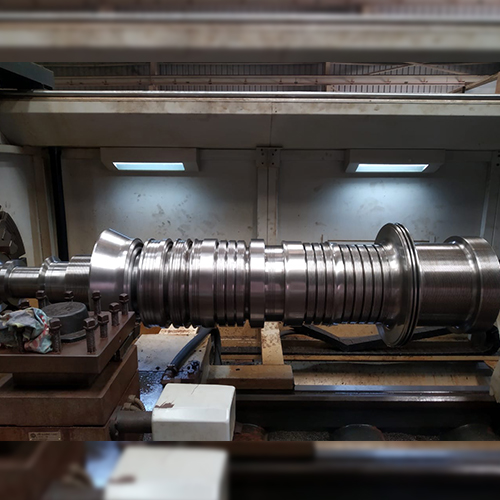
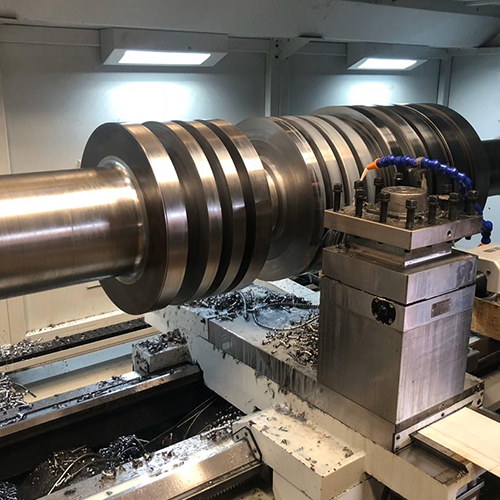
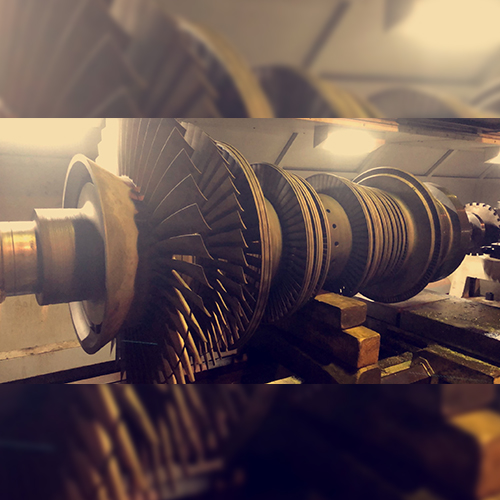
A pelletizer is a machine used in carbon black plants to convert carbon black powder into compact, uniform pellets for densification, easier handling, transportation, and storage.
The pelletizer consists of a cylindrical housing and a rotating shaft (rotor) with pins, and an external jacket heated with either steam or hot water. The Carbon Black powder is feed in one end of the housing and the pellets discharge at the other end. A control amount of water is added that mixes with the Carbon Black to produce the wet pellets
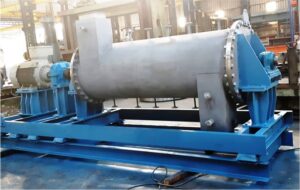
The rotor is operating from 450 to 650 r.p.m. and the tip of the pins friction against the Carbon Black/water mixture produces the round pellets.
Typically, the pelletizer speed is controlled by a VFD allowing further control of the pellet size and hardness
Downstream of the pelletizer is located the dryer, in order to dry out the wet pellets prior to storage in the silos
We provide different sizes/capacities of high performance pelletizers (HPP)

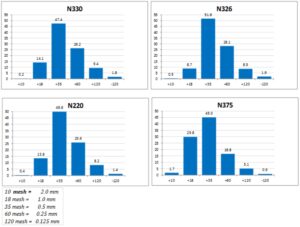
Typical pellet size distribution produced by our HPP pelletizers
About
Rotary Air Lock Valve
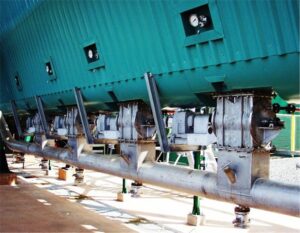
A rotary airlock, also known as a rotary valve, is a mechanical device commonly used in material handling systems in the carbon black plant. It is designed to control the flow of powders and granular materials between two different environments, such primary Bags Filters, Dryer, Silos
The basic design of a rotary airlock consists of a cylindrical housing with a rotating rotor inside. The rotor has a number of vanes or blades that create pockets or chambers between the rotor and the housing. As the rotor turns, the pockets move material from one side of the valve to the other.
In the carbon black plant, rotary airlocks are used to discharge Carbon Black powder from a reactor vessel or from a storage hopper. The valve is typically placed below the vessel or hopper, and the carbon black powder is fed into the inlet of the valve. The valve then discharges the powder or pellets into a pneumatic conveying system or a bagging system.
Rotary airlocks are commonly used in carbon black plants to regulate the flow of material from one process stage to another. Here are some of the features of rotary airlocks used in Carbon Black plants.
We provide different sizes/capacities of Rotary Air Valves for different applications within the Carbon Black process

About
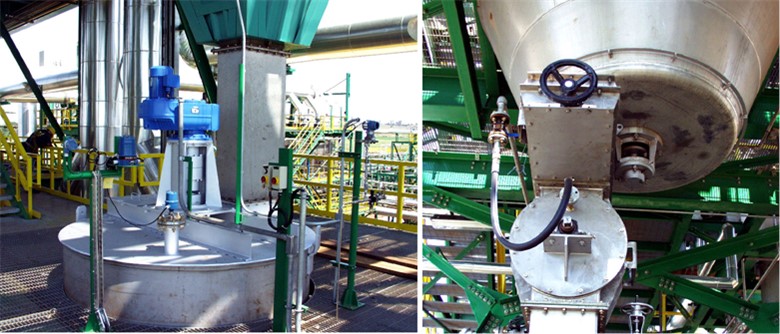
Surge Tank
Surge tanks are commonly used in carbon black plants to provide a buffer between different stages of the production process. Carbon black is a fine black powder that is produced by burning heavy petroleum products in a controlled environment. The production process involves several stages, including the initial combustion, quenching, filtering, and drying.
During the combustion stage, hot gases are generated that contain carbon black particles. These particles are then quenched by injecting water into the hot gas stream. The resulting mixture of water and carbon black particles is then sent to a surge tank.
The surge tank is designed to hold the mixture of water and carbon black particles while providing a controlled flow rate to the filtration and drying stages. This helps to prevent disruptions in the production process caused by fluctuations in the incoming feedstock. Surge tanks act as a buffer to store carbon black particles during such surges, preventing damage to the bag filters and ensuring that the purified gas released back to the reactor is of consistent quality. The surge tanks also help efficiently operate downstream equipment such as pneumatic conveying systems by providing a steady flow of material.
The surge tank is typically constructed of steel and is equipped with level sensors, flow meters, and other instrumentation to ensure that the flow rate is controlled and consistent. The tank is also equipped with agitation systems to ensure that the carbon black particles remain suspended in the water.
About
Three-way Valve
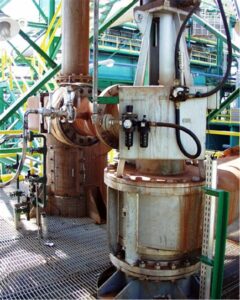
The Three-way valve function is to switch the smoke gas into the Primary Bags Collector and the gas into the Vent Scrubber during start up and shut down of the process
Three-way valves in carbon black plants are typically designed to handle high temperatures, as the process involves handling hot gases and powders. They are constructed from durable materials, such as stainless steel or high-grade alloys, to withstand the harsh operating conditions and ensure reliable and long-lasting performance.
These valves are controlled by pneumatic, electric, or hydraulic actuators, which allow for precise and remote operation. Some advanced three-way valves may also be equipped with position sensors or feedback mechanisms to provide real-time information about the valve’s status and position, enhancing process control and monitoring.
We provide different sizes of Three-way Valves depending on production rates and capacities
About
Venturi Cooler
Venturi coolers are widely used in carbon black plants as an essential part of the production process, in replacement of the obsolete and less efficient Quench Towers. Carbon black is a fine black powder that is produced by the incomplete combustion of hydrocarbons, typically from the heavy petroleum fractions. The production of carbon black generates significant amounts of heat, and Venturi coolers play a critical role in controlling the temperature during this process.
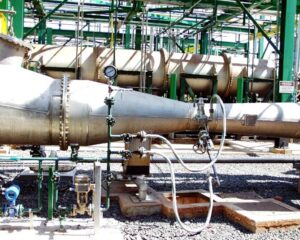
Venturi coolers are basically flow accelerators, designed based on the Venturi effect, which is a principle of fluid dynamics that states when a fluid flows through a constricted section of a pipe, its velocity increases and its pressure decreases. Due to the high velocity, the water that is injected at the throat of the Venturi is forming very small droplets that will rapidly evaporate, therefore the high efficiency of this device for water evaporation and cooling of the smoke gas
In the context of carbon black production, the Venturi cooler is strategically placed in the smoke line prior to the Agglomerator in order to cool down the smoke gas to around 240-250°C required for the filter operation
Basically is a flow accelerator. The Venturi cooler consists of a conical-shaped device with a narrow throat and a larger outlet. The hot gases from the carbon black reactor enter the throat of the Venturi cooler at high velocity, causing a drop in pressure and an increase in velocity. As the gas expands into the larger outlet section, it recovers part of the pressure drop
Venturi coolers are highly efficient in controlling the temperature in carbon black plants, preventing overheating and ensuring optimal production conditions.
We supply different sizes of Venturi Coolers, with velocities and sizes specifically calculated for different flow and operating conditions
About
Water Cooled Choke
The choke in a reactor system basically a flow accelerator, where the hot stream of gas generated in the upstream Combustor is accelerated to velocities in the range of 300 to 500 m/s. In this region of very high velocity the feedstock is injected at high pressure and temperature.
Due to this high velocity and the thermodynamic principle of droplets formation reflected by the Prandtl equation, the feedstock is rapidly break down in very small droplets of a few microns, therefore rapidly evaporating in a few milliseconds.
Traditionally, in the old reactors, the choke is made of refractory materials to withstand the high temperatures, but these chokes deteriorate and wear out quite rapidly whiting a few months, affecting the quality and consistency of the Carbon Black, and need to be replaced
The WCC is designed to operate under high-temperature and high-pressure conditions, and it is typically made of stainless steel or other corrosion-resistant alloys to withstand the harsh chemical environment of the process. To maintain a stable temperature and prevent overheating, the WCC is also equipped with a cooling system that circulates water around the choke components.
Due to the all metal components, with high temperature alloys and water cooling system, the perfect round shape of the throat remains constant over the time, the WCC produced superior and more consistent quality of Carbon Black, and last much longer that a traditional refractory choke.
Our high discharge coefficient nozzles HP-95 specially designed to operate with this choke provides an additional advantage in terms of oil penetration with higher Tint, lower Grit and improved conversion efficiency (yield)